
ERP System Guide for Sri Lankan Businesses: Everything You Need to Know in 2026
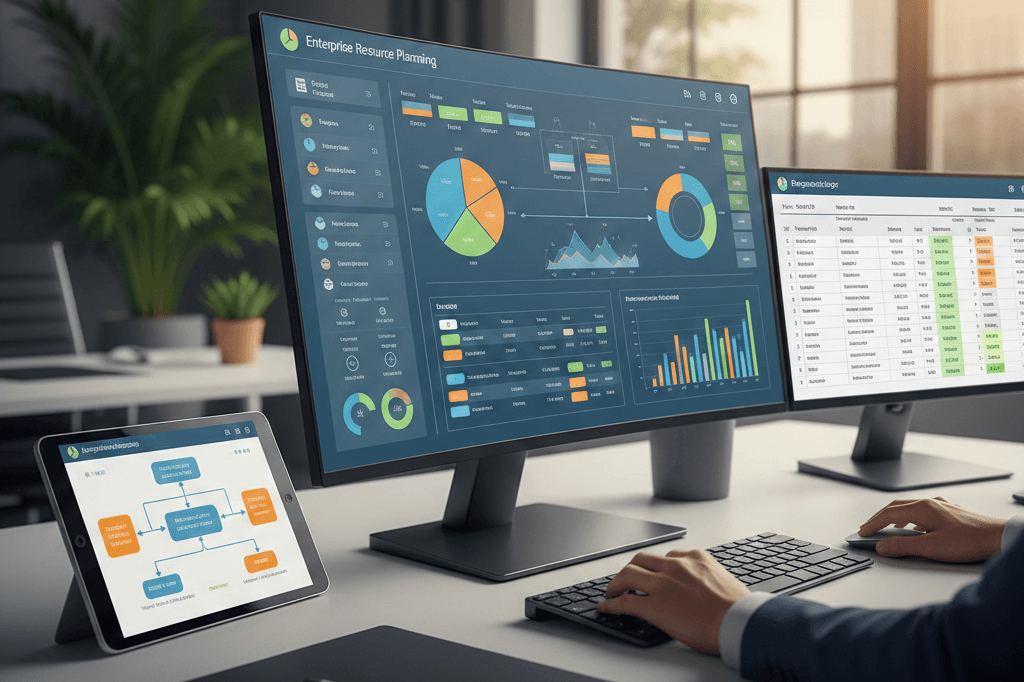
Complete guide to ERP systems in Sri Lanka. Learn about features, benefits, pricing, and implementation for manufacturing, retail, and service businesses.
ERP System Guide for Sri Lankan Businesses: Everything You Need to Know in 2026
Enterprise Resource Planning (ERP) systems are revolutionizing how Sri Lankan businesses operate. From small manufacturers in industrial zones to large retail chains across the island, ERP systems in Sri Lanka are becoming essential tools for managing complex business operations efficiently.
In this comprehensive guide, we'll explore everything you need to know about ERP systems, specifically tailored for the Sri Lankan business environment.
Understanding ERP Systems: The Basics
An ERP system in Sri Lanka is an integrated software platform that manages and automates core business processes across your entire organization. Unlike standalone applications, ERP systems provide a unified view of your business operations in real-time.
What Does ERP Stand For?
ERP stands for Enterprise Resource Planning. It's a system that helps you plan, manage, and optimize your business resources including:
- Financial resources and accounting
- Human resources and payroll
- Inventory and supply chain
- Manufacturing and production
- Sales and customer relationships
- Procurement and vendor management
How ERP Systems Work
Think of an ERP system as the central nervous system of your business. All departments feed data into a single database, eliminating duplicate data entry and ensuring everyone works with the same accurate information.
When your sales team in Colombo closes a deal, the ERP system automatically:
- Updates inventory levels
- Creates delivery orders for the warehouse
- Generates invoices in accounting
- Updates sales forecasts
- Notifies relevant departments
This automation saves time, reduces errors, and provides real-time visibility into your entire operation.
Why Sri Lankan Businesses Need ERP Systems
The Sri Lankan business landscape is evolving rapidly. Companies face increasing competition from both local and international players, rising customer expectations, and the need to operate efficiently with tighter margins.
1. Managing Multi-Location Operations
Many Sri Lankan businesses operate across multiple locations – factories in Katunayake, warehouses in Ja-Ela, offices in Colombo, and retail outlets in various cities. An ERP system provides centralized control while allowing local autonomy.
2. Navigating Complex Tax Compliance
Sri Lankan businesses must comply with various regulations:
- VAT (Value Added Tax) reporting
- NBT (Nation Building Tax) calculations
- PAYE and EPF/ETF compliance
- Auditing requirements for IRD (Inland Revenue Department)
- Import/export documentation
A proper ERP system automates these compliance requirements, reducing errors and audit risks.
3. Currency and International Trade Management
For businesses involved in import/export:
- Multi-currency transaction handling
- Exchange rate management
- Letter of credit processing
- Customs documentation
- Forex gain/loss calculations
4. Real-Time Decision Making
In fast-moving markets like retail and manufacturing, waiting for month-end reports is too slow. ERP systems provide real-time dashboards showing:
- Current cash position
- Inventory levels across all locations
- Production status and capacity
- Sales pipeline and forecasts
- Profitability by product, customer, or location
5. Scalability for Growth
Whether you're planning to:
- Open new branches in Kandy or Galle
- Expand product lines
- Enter export markets
- Acquire other businesses
- Increase production capacity
An ERP system scales with your growth without requiring complete system overhauls.
Key Modules in a Complete ERP System
Financial Management and Accounting
The heart of any ERP system, managing:
- General Ledger: Complete chart of accounts with multi-dimensional reporting
- Accounts Receivable: Customer invoicing, payment tracking, aging reports
- Accounts Payable: Vendor bills, payment processing, liability management
- Bank Reconciliation: Automated matching of bank transactions
- Fixed Assets: Asset tracking, depreciation calculations, disposal management
- Budgeting: Budget creation, variance analysis, financial planning
- Financial Reporting: Profit & Loss, Balance Sheet, Cash Flow statements
Inventory Management
Critical for retail, manufacturing, and distribution businesses:
- Multi-location inventory tracking
- Warehouse management with bin locations
- Batch and serial number tracking
- Expiry date management for perishables and pharmaceuticals
- Minimum stock level alerts
- Automated reordering
- Inventory valuation (FIFO, LIFO, Weighted Average)
- Stock transfer between locations
- Physical stock count reconciliation
Sales and Customer Management
Streamline your sales process:
- Quotation and proposal management
- Sales order processing
- Delivery note generation
- Invoicing with tax calculations
- Customer credit limit monitoring
- Sales commissions tracking
- Customer relationship management (CRM)
- Sales analytics and forecasting
Procurement and Supplier Management
Optimize purchasing operations:
- Purchase requisitions and approvals
- Request for quotation (RFQ) management
- Purchase order creation and tracking
- Goods receiving notes (GRN)
- Quality inspection integration
- Vendor performance evaluation
- Contract management
- Purchase analytics
Manufacturing and Production
For manufacturing businesses:
- Bill of materials (BOM) management
- Production planning and scheduling
- Work order management
- Shop floor control
- Quality control and assurance
- Capacity planning
- Production costing
- Scrap and waste tracking
Human Resources and Payroll
Manage your most important asset – your people:
- Employee database and records
- Attendance and leave management
- Payroll processing with EPF/ETF
- PAYE tax calculations
- Loan and advance management
- Performance appraisals
- Recruitment management
- Training and development tracking
Point of Sale (POS) Integration
For retail businesses, integration with POS systems is crucial. This connection ensures:
- Real-time inventory updates from all sales channels
- Unified customer data across online and offline
- Consolidated reporting of all revenue streams
- Centralized pricing and promotion management
Learn more about how modern POS systems in Sri Lanka complement ERP solutions for retail businesses.
Industries Benefiting from ERP Systems in Sri Lanka
Manufacturing
Sri Lankan manufacturers in textiles, food processing, pharmaceuticals, and other sectors use ERP to:
- Track raw materials from import to production
- Manage complex production processes
- Control quality across batches
- Calculate true production costs
- Optimize inventory levels
- Manage export documentation
Example: A garment manufacturer in Katunayake uses ERP to track fabric rolls from import, through cutting and sewing departments, to final export shipment, ensuring accurate costing and delivery timelines.
Retail and Wholesale
From supermarket chains to boutique stores:
- Manage inventory across multiple outlets
- Integrate with POS systems for real-time updates
- Handle promotions and seasonal pricing
- Track customer loyalty programs
- Analyze sales trends by location, product, and time
- Manage supplier relationships
Example: A retail chain with 15 stores uses ERP to manage central purchasing while allowing individual stores to track local inventory and sales, with consolidated reporting for management.
Distribution and Trading
Import/export businesses and distributors benefit from:
- Multi-currency and forex management
- Customs and shipping documentation
- Container and consignment tracking
- Credit management for multiple customers
- Territory-based sales force management
- Commission calculations for agents
Food and Beverage
Restaurants, bakeries, and food processors need:
- Recipe and ingredient management
- Batch tracking and expiry date monitoring
- Food safety compliance
- Multi-unit restaurant management
- Menu engineering and costing
- Supplier quality management
Healthcare and Pharmaceuticals
Hospitals, clinics, and pharmacies require:
- Regulatory compliance (NMRA requirements)
- Batch and serial number tracking
- Expiry date management
- Patient billing and insurance
- Medical inventory control
- Prescription management
Construction and Real Estate
Project-based businesses benefit from:
- Project cost tracking and budgeting
- Material and equipment management
- Subcontractor management
- Progress billing
- Document management
- Resource allocation across projects
Cloud vs. On-Premise ERP: What's Right for Sri Lanka?
Cloud-Based ERP Systems
Advantages:
- Lower upfront costs (subscription-based)
- Access from anywhere with internet
- Automatic updates and maintenance
- Scalable as you grow
- Disaster recovery built-in
- Works on any device
Considerations:
- Requires reliable internet connection
- Monthly/annual subscription costs
- Data stored off-premise (consider data sovereignty)
Best for: Small to medium businesses, multi-location operations, businesses with remote workers
On-Premise ERP Systems
Advantages:
- Complete data control and security
- One-time license fee
- Works without internet connectivity
- Customizable to specific needs
- No dependency on external servers
Considerations:
- High upfront investment
- Requires IT infrastructure
- Manual updates and maintenance
- Limited remote access
- Backup responsibility
Best for: Large enterprises, businesses with sensitive data requirements, locations with unreliable internet
Hybrid Approach
Many Sri Lankan businesses adopt a hybrid model:
- Core ERP on-premise for sensitive financial data
- Cloud modules for mobile sales teams
- POS systems in cloud for multi-location retail
- Best of both worlds with managed complexity
ERP Implementation: A Step-by-Step Guide for Sri Lankan Businesses
Phase 1: Planning and Selection (1-2 months)
Step 1: Define Business Requirements
- Document current processes and pain points
- Identify must-have vs. nice-to-have features
- Involve stakeholders from all departments
- Set clear objectives and success metrics
Step 2: Budget Planning
Consider all costs:
- Software licenses or subscription fees
- Hardware and infrastructure
- Implementation services
- Training and change management
- Ongoing support and maintenance
- Contingency budget (10-15% of total)
Step 3: Vendor Selection
Evaluate vendors based on:
- Industry experience in Sri Lanka
- Customer references from similar businesses
- Local support and presence
- Technology stack and scalability
- Pricing transparency
- Implementation methodology
Phase 2: Implementation (3-6 months)
Step 1: Project Kickoff
- Form implementation team
- Assign project manager
- Set timeline and milestones
- Establish communication protocols
Step 2: System Configuration
- Set up company structure and locations
- Configure chart of accounts per ICASL standards
- Define user roles and permissions
- Set up workflows and approval processes
- Configure tax structures (VAT, NBT, etc.)
Step 3: Data Migration
- Clean existing data
- Map old system fields to new ERP
- Migrate master data (customers, suppliers, items)
- Import opening balances
- Validate data accuracy
Step 4: Customization and Integration
- Develop custom reports if needed
- Integrate with existing systems (POS, e-commerce, banking)
- Set up automated workflows
- Configure document templates (invoices, orders)
Step 5: Testing
- Unit testing by module
- Integration testing across modules
- User acceptance testing
- Performance testing with realistic data volumes
- Create test cases for all business scenarios
Step 6: Training
- Train super users first
- Department-specific training sessions
- Create user manuals and documentation
- Provide hands-on practice time
- Schedule refresher sessions
Phase 3: Go-Live and Support (Ongoing)
Step 1: Go-Live Preparation
- Final data migration
- Switch off old systems
- Monitor closely for first week
- Have support team ready
- Keep old system accessible for reference
Step 2: Post-Implementation Support
- Daily check-ins for first week
- Weekly reviews for first month
- Monthly reviews for first quarter
- Address issues promptly
- Gather user feedback
Step 3: Optimization
- Review and refine processes
- Add new features as needed
- Train new employees
- Upgrade to latest versions
- Expand to additional modules
ERP Pricing in Sri Lanka: What to Expect
Small Business ERP (1-10 users)
Cloud-Based:
- Setup: LKR 200,000 - 500,000
- Monthly: LKR 25,000 - 75,000 per month
- Includes: Basic modules, standard features, email support
On-Premise:
- License: LKR 500,000 - 1,500,000 (one-time)
- Implementation: LKR 300,000 - 800,000
- Annual Maintenance: 15-20% of license cost
Medium Business ERP (10-50 users)
Cloud-Based:
- Setup: LKR 500,000 - 1,500,000
- Monthly: LKR 75,000 - 250,000 per month
- Includes: Advanced modules, customization, priority support
On-Premise:
- License: LKR 1,500,000 - 5,000,000
- Implementation: LKR 1,000,000 - 3,000,000
- Annual Maintenance: 15-20% of license cost
Enterprise ERP (50+ users)
Cloud-Based:
- Setup: LKR 1,500,000+
- Monthly: LKR 250,000+ per month
- Includes: All modules, extensive customization, dedicated support
On-Premise:
- License: LKR 5,000,000+
- Implementation: LKR 3,000,000+
- Annual Maintenance: Custom agreement
Total Cost of Ownership (TCO)
When evaluating costs, consider 5-year TCO:
Cloud ERP:
- Setup + (Monthly fees × 60 months) + Training + Customizations
- Example: LKR 500,000 + (50,000 × 60) + 200,000 = LKR 3,700,000
On-Premise ERP:
- License + Implementation + (Maintenance × 5 years) + Hardware + IT staff
- Example: LKR 2,000,000 + 1,000,000 + (400,000 × 5) + 500,000 = LKR 5,500,000
Common ERP Implementation Challenges and Solutions
Challenge 1: Resistance to Change
Solution:
- Involve users early in the selection process
- Communicate benefits clearly
- Provide adequate training
- Identify and empower champions in each department
- Celebrate quick wins
Challenge 2: Data Quality Issues
Solution:
- Start data cleaning before implementation
- Set data entry standards
- Assign data ownership
- Regular data audits
- Validation rules in the system
Challenge 3: Scope Creep
Solution:
- Clear project scope document
- Change request process
- Phase implementation (MVP first, then enhancements)
- Regular stakeholder alignment
- Realistic timeline expectations
Challenge 4: Insufficient Training
Solution:
- Structured training program
- Hands-on practice time
- User documentation
- Super user support network
- Refresher sessions
Challenge 5: Integration Complexities
Solution:
- Map integrations early
- Use standard APIs where possible
- Test integrations thoroughly
- Plan for data synchronization
- Have fallback procedures
ROI: Measuring ERP Success in Sri Lankan Businesses
Quantifiable Benefits
Financial Improvements:
- 25-40% faster financial closing
- 15-25% reduction in accounting errors
- 10-20% improvement in cash flow management
- 30-50% reduction in audit preparation time
Operational Efficiency:
- 20-35% reduction in inventory carrying costs
- 15-25% improvement in on-time delivery
- 30-50% reduction in manual data entry
- 40-60% faster report generation
Productivity Gains:
- 2-4 hours per day saved on manual tasks per employee
- 50-70% reduction in time spent finding information
- 30-40% improvement in process cycle times
Intangible Benefits
- Better decision-making with real-time data
- Improved customer satisfaction
- Enhanced vendor relationships
- Scalability for growth
- Competitive advantage
- Employee satisfaction with better tools
- Risk mitigation through better controls
Typical Payback Period
Sri Lankan businesses typically see ERP payback within:
- Small Businesses: 18-24 months
- Medium Businesses: 12-18 months
- Large Enterprises: 8-15 months
Integrating POS with ERP: Complete Business Management
For retail and hospitality businesses, the combination of a robust POS system with an ERP system creates a powerful ecosystem:
Benefits of POS-ERP Integration
- Unified Inventory: Real-time stock updates from every sale
- Consolidated Reporting: Single source of truth for all business data
- Automated Accounting: Sales data flows directly to financial records
- Customer Data Sync: Complete customer history across all touchpoints
- Centralized Product Management: Update prices and details from one location
- Multi-Channel Sales: Integrate physical stores, online shop, and marketplace sales
A modern POS system in Sri Lanka serves as the customer-facing front end, while the ERP system handles complex back-office operations. Together, they provide complete business visibility and control.
Choosing the Right ERP System for Your Sri Lankan Business
Key Selection Criteria
1. Industry Fit
- Does the ERP have experience in your industry?
- Are there templates for your business processes?
- Can you get references from similar businesses?
2. Scalability
- Can it handle your 3-5 year growth plans?
- Does it support multiple companies/entities?
- Can you add modules as needed?
3. Localization
- Sri Lankan tax compliance (VAT, NBT, WHT)
- Local banking integration
- Multi-currency support
- Local language support if needed
- Sri Lankan accounting standards
4. Technology
- Modern, intuitive interface
- Mobile accessibility
- Cloud or on-premise options
- API for integrations
- Security and backup features
5. Vendor Credentials
- Local presence in Sri Lanka
- Track record and customer base
- Support quality and responsiveness
- Training programs
- Long-term viability
6. Total Cost
- Transparent pricing
- No hidden costs
- Flexible payment terms
- Good value for investment
Future Trends: The Evolution of ERP in Sri Lanka
1. AI and Machine Learning
Next-generation ERP systems will offer:
- Predictive analytics for demand forecasting
- Anomaly detection for fraud prevention
- Intelligent automation of routine tasks
- Natural language processing for queries
2. Mobile-First Approach
- Complete ERP functionality on smartphones
- Field force automation for sales teams
- Mobile approvals for managers
- Real-time updates from anywhere
3. IoT Integration
- Manufacturing equipment connectivity
- Automated stock counts with RFID
- Vehicle tracking for distribution
- Environmental monitoring for warehouses
4. Advanced Analytics
- AI-powered business insights
- Predictive maintenance
- Customer behavior analysis
- Dynamic pricing optimization
5. Blockchain for Supply Chain
- Transparent supply chain tracking
- Smart contracts for vendors
- Authenticity verification
- Secure document management
How Finakle ERP Serves Sri Lankan Businesses
At Finakle, we've built our ERP system specifically for the Sri Lankan market with deep understanding of local business needs:
Sri Lanka-Specific Features
- Complete Tax Compliance: VAT, NBT, WHT, PAYE, and all Sri Lankan tax requirements
- Multi-Currency: Robust forex management for import/export businesses
- Local Banking: Integration with major Sri Lankan banks
- Regulatory Reporting: IRD, EPF/ETF, and other statutory reports
- Multi-Language: Support for Sinhala, Tamil, and English
Industry Solutions
- Manufacturing ERP with production planning
- Retail ERP with seamless POS integration
- Distribution ERP with territory management
- Service business ERP with project management
- Healthcare ERP with regulatory compliance
Implementation Support
- Local implementation team in Sri Lanka
- Proven implementation methodology
- Comprehensive training programs
- 24/7 local support
- Regular updates and enhancements
Flexible Deployment
- Cloud-based for flexibility and lower cost
- On-premise for complete control
- Hybrid options for specific needs
Making Your ERP Decision
Implementing an ERP system is a significant decision for any Sri Lankan business. Here's a final checklist to guide you:
Before You Start
- [ ] Clear business objectives defined
- [ ] Budget approved and allocated
- [ ] Executive sponsorship secured
- [ ] Implementation team identified
- [ ] Timeline expectations set
During Vendor Selection
- [ ] Requirements documented
- [ ] Multiple vendors evaluated
- [ ] Customer references checked
- [ ] Demos attended
- [ ] Contracts reviewed carefully
During Implementation
- [ ] Project manager assigned
- [ ] Regular progress reviews scheduled
- [ ] Training plan in place
- [ ] Data migration strategy defined
- [ ] Go-live support arranged
After Go-Live
- [ ] User feedback collected
- [ ] Issues documented and resolved
- [ ] Optimization opportunities identified
- [ ] ROI tracked and reported
- [ ] Continuous improvement mindset
Conclusion
An ERP system in Sri Lanka is no longer a luxury reserved for large corporations. Businesses of all sizes are discovering how integrated business management systems can transform operations, improve decision-making, and drive growth.
The key to successful ERP implementation lies in:
- Choosing the right system that fits your industry and size
- Working with experienced vendors who understand the Sri Lankan market
- Investing in proper implementation and training
- Managing change effectively across your organization
- Maintaining and optimizing continuously post-implementation
Whether you're a manufacturer looking to streamline production, a retailer seeking better inventory control, or a service business wanting integrated operations, an ERP system provides the foundation for sustainable growth.
For retail businesses, combining ERP capabilities with a modern POS system in Sri Lanka creates an unbeatable combination for managing both customer-facing and back-office operations.
Ready to transform your business with an ERP system? Contact Finakle today for a consultation and see how our Sri Lanka-focused ERP solution can help your business grow.
Related Resources: